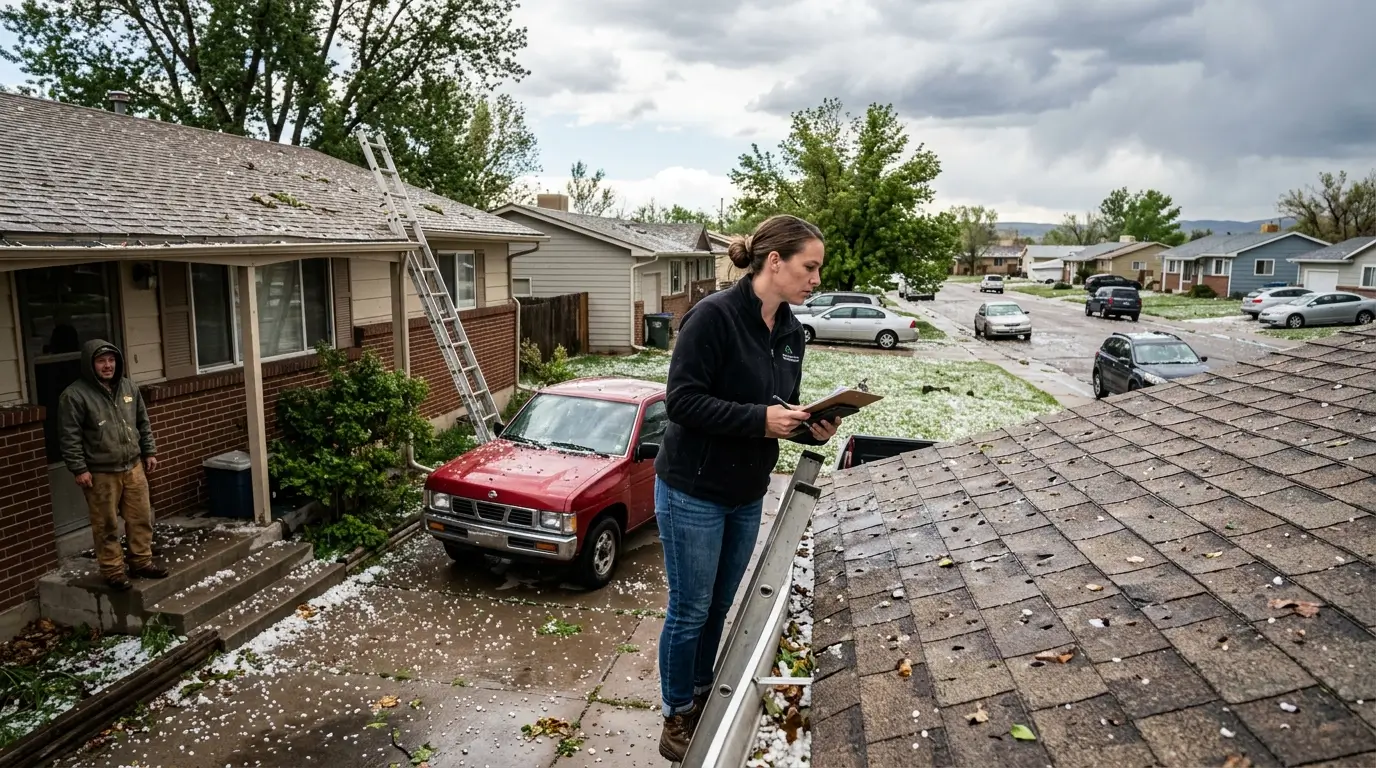
If you own rentals anywhere between Cheyenne and Fort Collins, hail isn’t a risk you might face someday. It’s a season you plan around. A single storm can leave a roof, siding, gutters, and condensers needing work in the same afternoon, and the weeks that follow bring adjusters, door-knocking contractors, and tenants with questions. Owners who prepare before the first storm handle all of it with less stress and a stronger claim.
Key Takeaways
NWS Cheyenne calls the Front Range and High Plains a hot spot for hail, and the area around Wyoming, Nebraska, and Colorado has been nicknamed “Hail Alley.”
The Colorado Division of Insurance says many policies carry wind and hail deductibles set as a percentage of coverage, and no payment is issued when damage falls below the deductible.
Dated before-and-after photos and prompt tenant reports are the foundation of a clean claim.
Colorado and Wyoming both bar roofing contractors from paying or rebating a homeowner’s deductible, and Wyoming’s statute also bars storm-repair contractors from acting as adjusters.
Tell tenants what to report and what to expect before the first storm, not after.
Why This Corridor Is Different
The National Weather Service in Cheyenne notes that by May the area shifts from wind and winter weather to severe weather season, and that the Front Range and High Plains are a hot spot for hail. An NWS Cheyenne meteorologist told Cowboy State Daily that elevation plays a role, because large hail has less time to melt on its way down, and that early June is a prime time for severe storms in southeast Wyoming. The same report cites the National Severe Storms Laboratory, which puts the Nebraska, Colorado, and Wyoming corner at an average of seven to nine hail days a year. A Colorado State University climatologist’s study, reported by the Wyoming Tribune Eagle, found Cheyenne averaged 8.6 hail days a year from 1892 to 1993, the most of any Front Range city.
Before the Season: Policy, Photos, and a Roof Baseline
Start with the policy. The Colorado Division of Insurance advises owners to review their declarations page, because many homeowners policies carry wind and hail deductibles that are a percentage of coverage, such as 1%, 2%, or 5%, and when estimates fall below the deductible the company won’t issue a payment. A landlord policy is a different product from a tenant’s renters policy, so ask your agent exactly how yours handles wind and hail, including how an older roof is valued.
Then build a baseline. In spring, take dated photos of the roof, siding, gutters and downspouts, window screens, fences, and outdoor equipment, and keep the roof’s age and installation records on file. If you later need to show what changed, those images are the proof. Our post on why documentation matters makes the same case for every part of the rental. When a roof does need replacing, the Division also suggests asking your insurer about premium discounts or deductible savings for hail-resistant materials.
After a Storm: A Sequence That Protects the Claim
First, hear from tenants. Ask them to report ceiling stains, leaks, broken windows, and visible damage right away through the portal. Next, document the damage from the ground with photos and video before anything is cleaned up, which matches the Division’s advice to start the claims process and document the damage. Take reasonable temporary steps to prevent further damage, such as tarping an opening, and keep those receipts. Then have a licensed local roofer inspect, since hail damage can be hard to see from the ground, and compare the repair estimate to your deductible before deciding to file.
Don’t rush into permanent repairs. The Division notes that the first repair estimate isn’t always the final one, contractors may find additional damage once work begins, and you should give your insurer that information before letting repairs continue, and that work unrelated to the storm won’t be covered. Keep the adjuster’s scope, your contractor’s scope, and every photo together.
Storm Chasers and the Deductible Rule
After a big storm, out-of-town contractors often canvass neighborhoods. Both states restrict their favorite pitch. Colorado’s residential roofing law, C.R.S. 6-22-101 to 6-22-105, makes it illegal for roofing contractors to pay, waive, or rebate a homeowner’s deductible. In Wyoming, W.S. 40-12-702 bars contractors soliciting exterior storm damage repairs from paying, advertising, or promising to pay or rebate any portion of an insurance deductible, and it also bars them from claiming to be or acting as an adjuster. If anyone offers to cover your deductible, walk away. Verify licensing, get a written contract, and use vendors you know. This is one place a manager with established contractors earns their keep, and our maintenance services focus on keeping small problems from becoming big ones.
What to Tell Tenants
Set expectations before the season. Ask tenants to report leaks, stains, and broken windows immediately, to keep gutters and downspouts clear of obstructions, and to expect inspectors and roofers on the property. Explain how access will be handled under the lease and applicable notice rules, and give them a rough timeline once repairs are scheduled. Vehicle damage is a separate matter: the Colorado Division of Insurance notes that car damage is handled under comprehensive auto coverage and is subject to that policy’s deductible, and tenants’ personal belongings are generally a matter for their own renters insurance, not the owner’s policy.
A Hail-Season Calendar
Spring, before May: Review the policy and deductible, take baseline photos, clear gutters, and confirm roof age and records.
June through August: Watch forecasts, keep vendor contacts current, and respond to tenant reports the same day.
After any storm: Document, inspect, compare the estimate to your deductible, and get the insurer’s go-ahead before permanent repairs.
Fall: Finish approved repairs before winter, and review our winterization checklist.
FAQ
When is hail season in Cheyenne?
NWS Cheyenne says severe weather season takes over by May, and an NWS meteorologist calls early June a prime time for severe storms in southeast Wyoming.
Can a roofer waive my deductible?
No. Colorado’s roofing law and Wyoming’s storm damage repair statute both prohibit contractors from paying or rebating a homeowner’s deductible.
What is a wind and hail deductible?
A separate deductible for wind and hail claims that is often a percentage of coverage, such as 1%, 2%, or 5%, according to the Colorado Division of Insurance.
Should I file a claim for minor damage?
Compare the repair estimate to your deductible first. If the damage falls below it, the insurer won’t issue a payment, so get an inspection before you decide.
Be Ready Before the Storm
Hail is predictable in one sense: it will come. The owners who recover fastest are the ones with current photos, a clear understanding of their deductible, trusted vendors, and tenants who know what to report. If you’d rather have a team keeping documentation, contractors, and tenant communication in order before the next storm, our Cheyenne property management team coordinates the maintenance and upkeep that make a claim go smoothly.